

Enhance your Microsoft 365 Business Platform with cloud calling capabilities and a ‘smart’ new website.
Add Cloud Calling
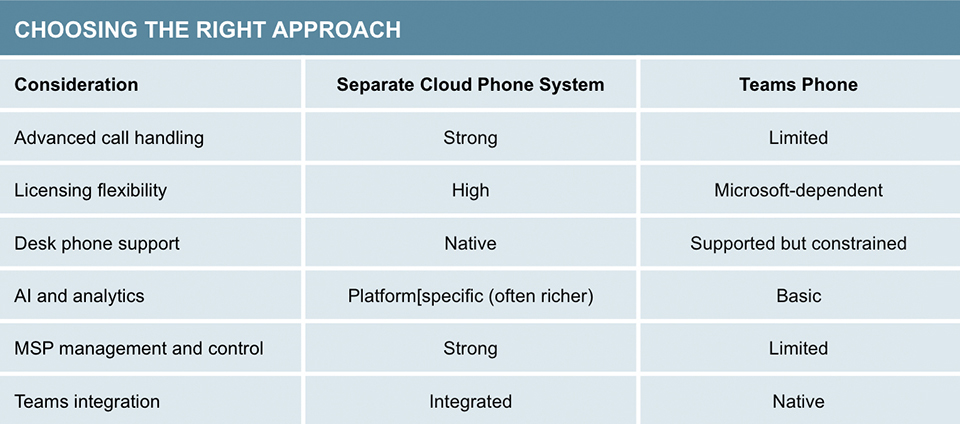
There are two proven approaches to adding a fully integrated cloud-based phone system to Microsoft 365. Both approaches replace legacy, on-premise phone systems, support modern hybrid work and integrate with Microsoft’s productivity tools. The key differences lie in flexibility, functionality, licensing and long-term control.
Option 1: A Separate Cloud Phone System (Integrated with Microsoft 365)
In this model, a dedicated cloud-based phone system operates independently but integrates tightly with Microsoft 365 for identity, contacts, calendars and collaboration workflows.
Key Characteristics:
- Enterprise-grade cloud PBX independent from Microsoft’s voice licensing tiers
- Advanced calling features (e.g. auto-attendants, call queues, analytics and AI enhancements)
- Native support for desk phones, mobile apps and soft phones
- Integration with Outlook, Teams, CRM and service management platforms
- Greater customization, administrative control and roadmap independence
This approach is best suited for businesses that require advanced call handling and reporting; want to avoid Microsoft license upgrades solely for voice; or MSP-managed environments that require multi-tenant control and flexibility.
Option 2: Microsoft Teams Phone (Native Calling Inside Teams)
This approach enables voice calling directly within Microsoft Teams using Microsoft’s built-in phone capabilities. Key characteristics include:
- Voice calling embedded directly in the Teams application
- Requires Teams Phone licensing plus calling plans or operator connectivity
- Simplified user experience for Teams-centric organizations
- More limited PBX features compared to dedicated cloud phone platforms
This approach is best suited for Teams-first organizations prioritizing simplicity; businesses aligned with Microsoft’s licensing and product roadmap; and/or environments where Teams is already the primary communications interface.
How to Choose the Right Approach
Both of the approaches described above modernize business communications and eliminate traditional phone systems.
The ‘right’ cloud calling solution for your organization depends on whether your priority is maximum flexibility and advanced telephony … or native simplicity within Microsoft Teams.
The Bottom Line
Many organizations adopt cloud calling as a modular step, allowing them to modernize communications at their own pace while aligning with broader Microsoft 365 transformation goals.
Add a ‘Smart’ New Website
A ‘smart’ website is not a redesign or cosmetic upgrade to your existing site. It is an intelligent, interactive front door to how your business actually operates. Your ‘smart’ website starts open and accessible to every visitor, then becomes progressively smarter as relationships develop — engaging users, guiding decisions and enabling real action without delay.
The Problem with Traditional Websites
Most websites today are still digital brochures. They present information, collect form submissions and wait for someone on your team to respond. For small and midsize businesses, this creates delays, missed opportunities and unnecessary manual effort. A ‘smart’ website replaces passive interactions with active engagement. It does not wait for follow-up — it participates in the customer experience from the first visit forward.
Six Core Capabilities of a ‘Smart’ Website
- Open, Frictionless Engagement – Visitors can explore freely with no login required. They can ask questions at any time, and receive guidance in real time.
- Conversational Guidance – Real conversations replace forms, helping visitors get answers and direction without searching pages.
- Instant Action – Users can book meetings, request support or take next steps immediately no waiting or back and forth e-mails.
- Identity-Aware Experience – When appropriate, users can securely sign in using Microsoft 365 … unlocking personalization and secure self-service.
- Secure Self-Service Portals – Customers and partners can manage appointments, track requests and access updates in one trusted place.
- Continuous Experience – Conversations extend beyond the website into e-mail, calendars and collaboration tools — without losing content.
Business Outcomes that Matter
‘Smart’ websites are designed to remove friction at every stage of engagement. Organizations using a ‘smart’ website experience faster response times, higher conversion rates, reduced administrative overhead and improved customer satisfaction.
By connecting the website directly to day-to-day business workflows, teams spend less time chasing leads and more time serving customers.
Smart Website vs Legacy Website
Legacy Website – Static pages, anonymous visitors, form submissions, manual follow-up and disconnected systems.
‘Smart’ Website – Open and conversational, progressive identity awareness, immediate action, automation and seamless integration with how the business works.
Closing Perspective
A ‘smart’ website is not about adding complexity. It is about simplifying engagement, accelerating response and making the website an active participant in the success of the business.
More than a website … a ‘smart’ extension of your business.

